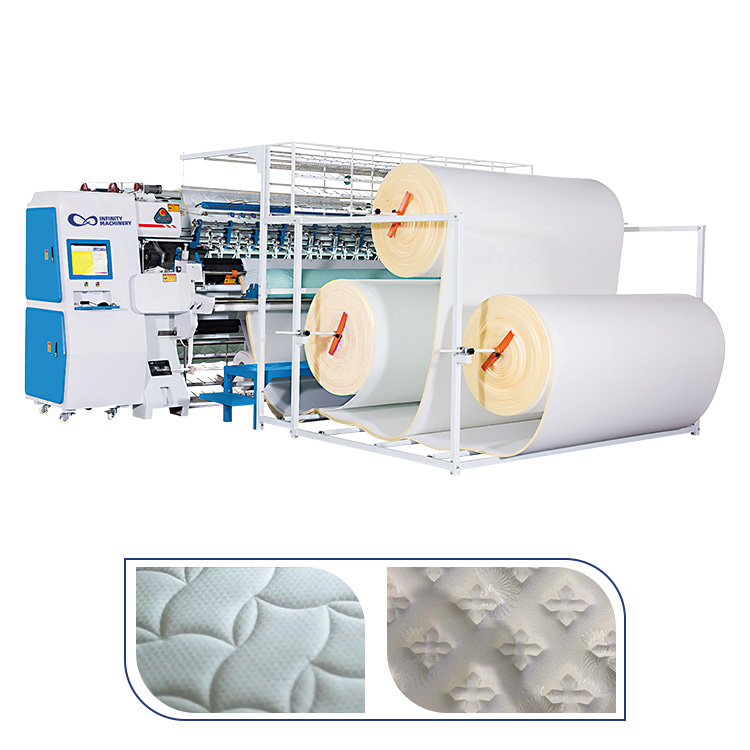
The multi-needle quilter is the highest-throughput machine in the mattress factory, and the broken needle is its most expensive failure. The quilter carries the twelve to twenty-four needles across the quilted panel, and when the needle breaks mid-shift the machine stops, the needle fragments risk the fabric and the operator, the thread nests jam the hook and the line waits for the replacement; the single break costs the shift output, and the recurring breaks cost the needle budget and the repair calls. The break is rarely the needle itself: the three cause groups run the machine condition, the needle handling and the material, and the maintenance program targets the causes, not the symptom. The factory that runs the daily clean, the weekly alignment check and the needle care routine keeps the needles whole, because the quilter that never breaks a needle mid-shift is the quilter that feeds the assembly without the stop. This guide walks the break causes, the daily and weekly upkeep, the needle care and alignment, the lubrication rules and the prevention plan that keeps the multi-needle quilter running. The IF-Q-1200 Computerized Chain Stitch Multi-Functional Quilting Machine, the IF-Q-1400 Computerized Chain Stitch Multi-Needle Quilting Machine and the IF-Q-1300 Computerized Chain Stitch Multi-Needle Quilting Machine are the machine cases this guide maps.
The broken needle question is the reliability question of the quilting line, and the answer starts with what the break actually costs. The multi-needle quilter sews the quilted panel that the mattress line depends on, so the machine that stops stops the panels, and the stopped panels stop the border, the assembly and the packing downstream; the quilting line is the first station of the mattress, and the first station that stops idles everything after it. The single break triggers the cascade: the needle snaps, the thread nests around the hook, the fabric must be cleared and inspected for the fragments, the machine re-threads the needle, and the restart takes the twenty to forty minutes that the factory never planned; the cascade turns the one break into the half-shift disruption. The recurring breaks add the budget line: the needles cost per pack, the thread nests waste the thread, the repair calls cost the service fee and the idled operators cost the paid hours, and the factory with the frequent breaks spends more on the breaks than the maintenance that prevents them. The break is also the quality risk: the needle fragment that stays in the fabric reaches the customer, and the fabric that catches the broken needle gets the pulled threads and the damaged quilting; the quality risk is the reason the break is the machine failure the factory must prevent, not just repair. The break question is the prevention question, and the prevention is the maintenance program this guide builds.
The table is the break accounting, and the prevention costs less than any row on it.
The break causes group into the three families, and the maintenance targets each family at its source. Group one is the machine condition: the needle bar that wears develops the play, the hook timing that drifts makes the needle hit the hook, the presser foot pressure that varies bends the needle and the feed dog wear misaligns the fabric path, and each condition issue puts the needle into the position where the forces snap it; the machine condition group is the alignment and the wear, and it is the group the maintenance prevents. Group two is the needle handling: the needle that is bent on the install, the needle size that does not match the fabric weight, the needle that runs past its service life and the needle that is forced into the bar by hand all fail early, and the handling group is the discipline the operator controls; the handling issues are the most common and the cheapest to fix. Group three is the material: the fabric seam that hits the needle, the foam layer that shifts and bunches, the tape or the elastic that catches and the knots in the thread that yank the needle all load the needle beyond its rating; the material group is the input quality, and it is the group the factory controls upstream. The three groups explain the recurring break: the factory that replaces the needle but never fixes the machine condition or the material keeps the same break, because the needle is the weakest point where the causes express themselves; the prevention program treats the three groups, not the needle.
Machine condition: worn needle bar play, drifting hook timing, presser pressure, feed dog wear | Needle handling: bent install, wrong size, past service life, forced into the bar | Material: fabric seams, shifting foam, catching tape, thread knots | The needle is the weakest point where the three cause groups express themselves
The daily upkeep is the fifteen to thirty minute routine at the start of the shift, and it catches the conditions that become the mid-shift break. Step one is the visual sweep: the operator walks the machine with the light, checks the needle bank for the bent or the damaged needles, looks for the thread nests around the hooks and the lint on the feed, and flags anything wrong before the power goes on; the sweep is the two-minute check that sees the problem before the running hour. Step two is the clean: the lint is the quilter killer, because the cotton lint and the fiber dust pack into the needle bar guides and the hook area, and the packed lint adds the friction that bends the needle and jams the hook; the air blow and the brush clear the lint from the needle area and the hook race, and the clean runs every shift, not weekly. Step three is the thread check: the operator verifies the thread path through the tensioners, checks the tension against the shift plan and re-threads the questionable needles, so the tension imbalance that yanks the needle is corrected before the panel starts. Step four is the test stitch: the machine runs the short test panel, the operator checks the stitch quality across the needle bank and listens for the knock that signals the misalignment, and the line starts only when the test is clean; the test stitch is the final gate of the daily routine. The daily upkeep is the habit the top factories run without the debate, and the habit keeps the needles whole through the shift.
The daily table is the shift-start routine, and the fifteen to thirty minutes prevent the twenty to forty minute break.
The weekly alignment is the deeper check that the daily routine cannot reach, and the alignment is where the machine condition breaks originate. The needle bar check runs first: the operator checks the bar for the play and the wear, verifies the needles are seated straight and confirms the bar height is consistent across the bank, because the worn or misaligned bar puts every needle into the wrong geometry. The hook timing check runs second: the timing sets the needle to hook clearance, the clearance the hook passes without the strike, and the operator verifies the timing at the reference marks and adjusts the drifting hooks, because the hook that strikes the needle is the most direct break cause. The presser check runs third: the presser foot pressure is verified against the fabric stack, the even pressure across the needles is confirmed and the foot wear is inspected, because the uneven pressure bends the needles and the worn foot misguides the fabric. The lubrication check runs fourth: the oil levels are verified at the lubrication points, the oil lines are checked for the flow and the schedule is logged, because the dry machine runs hot and the heat weakens the needles; the lube check is the condition the daily routine does not see. The weekly alignment runs in the sixty to ninety minutes at the shift end, the trained technician does the checks and the log records the findings, so the machine condition is corrected weekly instead of discovered mid-shift.
The needle care is the handling discipline that removes the most common break causes, and the care runs through the selection, the install and the life cycle. The selection matches the needle to the job: the needle size follows the fabric weight and the thread, the light fabrics take the fine needles and the heavy quilts take the stronger needles, and the needle type follows the chain stitch or the lock stitch head; the wrong size needle bends or breaks under the load the design never intended. The install follows the procedure: the needle is inserted straight into the bar, the flat side faces the hook per the machine manual, the needle is tightened with the wrench to the torque, never forced by hand, and the installed needle is checked for the straightness against the reference; the bent install is the hidden break that shows up mid-panel. The life cycle follows the hours: the needle runs the service life set by the factory, the high-volume machines change the needles on the scheduled basis, and the used needle is retired before it fatigues, because the needle that runs past its life breaks at the least predictable moment; the scheduled change is the replacement that the operator controls. The care also covers the storage: the spare needles are kept in the case with the sizes separated, the needles are never thrown loose into the drawer and the damaged needles are discarded, because the mixed storage is where the wrong needle gets installed; the care is the discipline that the operator owns, and the discipline is the cheapest break prevention in the factory.
Selection: needle size follows fabric weight and thread, type follows the head | Install: straight into the bar, flat to the hook, torqued not forced, straightness checked | Life cycle: scheduled change at the service hours, retire before fatigue | Storage: cased, sizes separated, damaged needles discarded | Material gate: fabric seams and knots at the load-in, layer alignment, tape path, tension balance each shift
The prevention plan keeps the multi-needle quilter running in six steps, run over the first month and then maintained on the weekly cycle. Step 1: the break baseline, logging every break with the needle, the cause group and the downtime for the month, and computing the break rate per shift and the cost per break; the baseline is the starting point the plan reduces. Step 2: the daily routine, installing the shift-start sweep, the lint clean, the thread check and the test stitch, and posting the checklist at the machine; the daily routine removes the handling and the lint causes. Step 3: the weekly alignment, scheduling the needle bar, the hook timing, the presser and the lubrication checks with the trained operator or the technician, and logging the findings; the weekly alignment removes the machine condition causes. Step 4: the needle program, setting the needle selection table, the install procedure, the scheduled change hours and the cased storage, and training the operators on the program; the needle program removes the handling causes at the source. Step 5: the material gate, running the fabric inspection, the layer alignment, the accessory check and the tension balance at the load-in, and signing the upstream check; the material gate removes the input causes. Step 6: the review loop, comparing the break rate monthly against the baseline, adjusting the schedule for the new fabrics and the new patterns and retraining the new operators; the loop keeps the quilter at the zero-break target, and the quilter that never stops mid-shift is the first station that never delays the mattress line.
The IF-Q-1200, the IF-Q-1400 and the IF-Q-1300 cover the multi-functional, the high-volume and the mid-volume quilting of the mattress line, and the six-step plan keeps the needle bank whole in your factory. Contact our quilting team for the maintenance schedule for your line, the needle program setup and the prevention plan that stops the mid-shift breaks.
Contact our quilting team today for the maintenance package: the daily checklist, the weekly alignment routine and the needle care program that keeps your multi-needle quilter running.