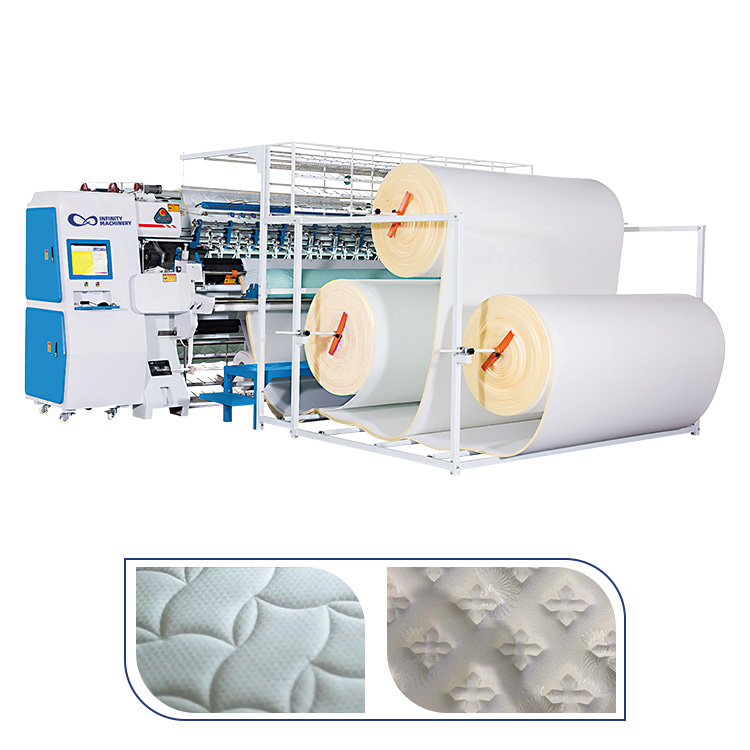
The VFD question starts with the motor that runs whether the machine works or not, and the idle motor is the hidden line on the electricity bill. The quilting line runs the main motor at the fixed speed through the whole shift: the needle head spins at the constant rate, the fabric feed and the take-up roll follow and the motor keeps turning during the thread change, the panel swap and the pattern adjustment, and the fixed-speed motor draws the full current even when the work slows; the idle share is the waste. The variable frequency drive changes the math: the VFD controls the motor speed to the actual demand, the soft start cuts the inrush spike, the idle periods drop the speed instead of the full spin and the load-matched speed draws the current the work needs, so the same line runs the quieter, cooler and cheaper motor. The payback question is the arithmetic: the IF-Q-1200 Computerized Chain Stitch Quilting Machine and the IF-Q-1400 Multi-Needle Quilting Machine run the servo-driven motors that pair with the speed control, and the IF-QS2-1 Single Needle Quilting Machine is the entry case where the retrofit adds the variable speed to the existing head; the payback math maps the three machines.
The idle-motor math explains where the kilowatts go, and the numbers follow the motor load, the idle share and the hours. The motor load is the first number: the quilting head runs the motor at the rated load of the 0.8 to 1.5 kilowatts, the feed and the take-up drives add the smaller loads and the full line draws the 2 to 3 kilowatts during the run, so the running load is the base of the bill; the load is the first number. The idle share is the second number: the thread break stops the head, the panel change pauses the feed and the pattern adjustment idles the machine, and the stops add the 20 to 30 percent of the shift when the motor still spins at the full speed, so the idle share is the waste that the fixed-speed machine cannot avoid; the idle is the second number. The hours are the third number: the two-shift line runs the sixteen hours a day, the motor draws the full power for the idle hours too and the monthly kilowatt-hours accumulate across the days, so the hours multiply the waste into the significant bill line; the hours are the third number.
The VFD mechanism explains how the speed control cuts the current, and the drive, the start and the load-matching are the three actions. The drive is the first action: the variable frequency drive converts the fixed mains frequency into the variable output, the motor speed follows the frequency and the drive turns the fixed-speed machine into the variable-speed one, so the retrofit adds the control without replacing the motor; the drive is the hardware step. The soft start is the second action: the drive ramps the motor from the zero instead of the full-current inrush, the start spike that draws the five to seven times the running current disappears and the mechanical stress on the gears and the needle bar drops with it, so the soft start saves the electricity and the wear together; the soft start is the dual saving. The load matching is the third action: the drive slows the motor during the thread change and the pattern adjustment, the slow speed draws the fraction of the full current and the resumed run returns to the rated speed, so the machine keeps the full output during the work and the reduced draw during the idle; the load matching is the core saving. The cooling is the fourth action: the slower motor runs cooler, the cooler motor holds the insulation life and the lower heat load on the quilting head reduces the needle and the bearing stress, so the retrofit improves the reliability along with the bill; the cooling is the secondary gain.
The payback math turns the retrofit into the months, and the twelve-month case runs on the saving, the cost and the rate. The saving is the first number: the two-shift quilting line draws the 2 to 3 kilowatts across the sixteen hours, the idle share of the twenty-five percent plus the speed matching cut the thirty to fifty percent of the motor draw and the monthly saving lands at the three hundred to six hundred kilowatt-hours per line, worth the forty to ninety dollars a month at the typical industrial rate; the saving is the monthly line. The cost is the second number: the VFD unit for the quilting motor range costs the four hundred to nine hundred dollars installed, the smaller feed drives add the share and the total retrofit lands at the six hundred to twelve hundred dollars per line; the cost is the one-time line. The payback is the division: the six hundred to twelve hundred dollar cost divided by the forty to ninety dollar monthly saving gives the seven to fifteen months, and the two-shift line with the higher idle share lands at the twelve-month mark while the single-shift line runs longer; the payback is the 12-month case. The rate risk is the final number: the electricity price, the shift pattern and the idle share each move the payback, and the plant with the cheap power and the low idle runs the longer return while the plant with the peak pricing and the stop-heavy patterns hits the twelve months; the rate check is the honest gate.
The machine fit decides where the VFD pays, and the servo machines and the entry machine split the cases. The servo case is the IF-Q-1200 Computerized Chain Stitch Quilting Machine: the servo motors already run the variable speed through the computer, the pattern speeds adjust in the program and the idle control is built in, so the machine pair is the case where the retrofit is already present; the servo case is the high-speed line. The multi-needle case is the IF-Q-1400 Computerized Multi-Needle Quilting Machine: the larger head draws the higher load, the two-shift run burns the more kilowatt-hours and the VFD on the main drive returns the fastest because the saving is proportional to the load, so the heavy line is the first retrofit candidate; the multi-needle case is the biggest saving. The entry case is the IF-QS2-1 Single Needle Quilting Machine: the single-head machine draws the smaller load, the retrofit still cuts the idle share and the payback runs longer on the lower absolute saving, so the entry machine is the retrofit for the plant that wants the full-line energy story; the entry case is the completeness step. The fit rule is the priority: retrofit the highest-load machine on the longest shift first, because the saving follows the load and the hours; the priority is the retrofit order.
The retrofit checklist turns the payback case into the install, and the measurement, the sizing and the commissioning are the three steps. The measurement is the first step: the plant logs the quilting motor draw across the week, the running, the idle and the stop patterns are timed and the load profile decides the drive size, so the measurement prevents the undersized or oversized drive; the measurement is the sizing base. The sizing is the second step: the VFD is rated for the motor full load with the headroom, the braking resistor covers the fast stops and the enclosure matches the quilting dust environment, so the sized drive runs the motor without the derating; the sizing is the hardware step. The commissioning is the third step: the drive parameters are set to the measured profile, the ramp times and the idle speed are tuned and the line runs the test shifts against the logged baseline, so the commissioning proves the saving before the full rollout; the commissioning is the verification step. The rollout is the fourth step: the first line pays back, the measured saving funds the next drive and the plant rolls the retrofit across the quilting floor one machine at a time, so the retrofit becomes the self-funding program; the rollout is the scale step.
The VFD retrofit case closes with the arithmetic that the plant can run: the quilting line wastes the 20-30 percent of the shift spinning the idle motor at the full speed, the variable frequency drive cuts the idle draw and matches the speed to the work, and the 600-1200 dollar retrofit against the 40-90 dollar monthly saving lands the two-shift line at the 12-month payback. The measurement, the sizing and the commissioning turn the case into the install, and the first payback funds the next drive across the quilting floor; the energy upgrade is the self-funding program that cuts the bill and the wear together. Contact our quilting team for the VFD sizing worksheet, the load-profile template and the payback calculator for the quilting lines in your factory.
Contact today for the VFD sizing worksheet, the load-profile template and the 12-month payback calculator for the quilting lines in your factory.