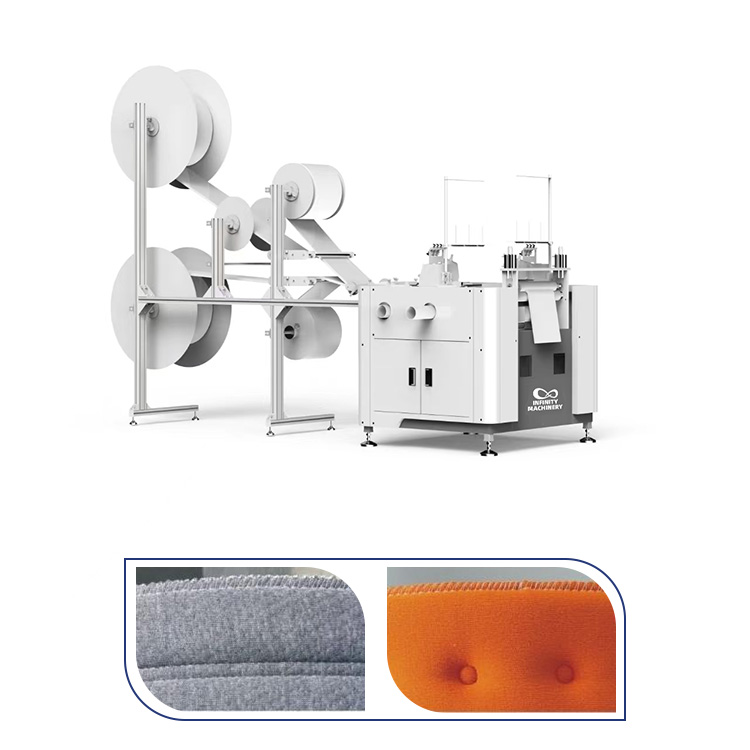
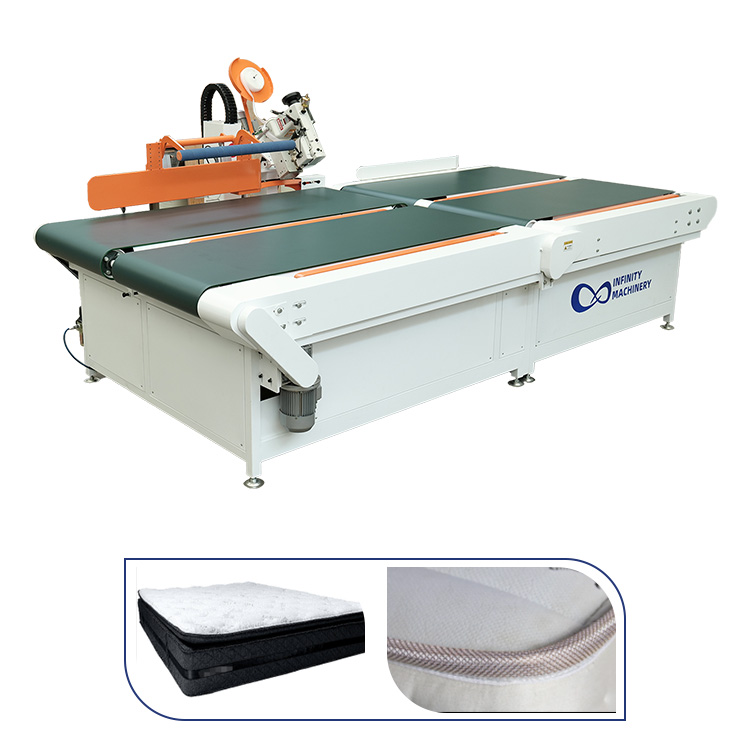
The manual line bottlenecks because the line can only run as fast as the slowest station, and the human-paced assembly has the slowest station that moves with the shift, the skill and the fatigue. The pile-up appears at the transfer points: the mattresses wait in front of the slow station while the fast station upstream keeps producing, and the waiting stack grows through the shift. The root causes are the four: the unbalanced stations where the work content differs, the glue drying time that holds the mattress at the lamination station, the heavy handling that slows the transfer between the stations, and the skill variance where the new operator runs the half of the speed of the veteran. The fix is the balancing and the automation at the right points: the work content rebalanced across the stations, the glue-spray line that removes the manual lamination, the automatic assembly machines that replace the manual spring handling, and the conveyors that keep the WIP moving. The IF-BA Automatic Bonnell Spring Assembling Machine, the IF-SB-A2 Double-Head Mattress Sewing Machine and the IF-T4 Automatic Tape Edge Machine are the automation points that clear the pile-ups.
The pile-up appears at the predictable points in the manual line, and the map of the waiting stacks shows where the line is unbalanced. The first pile-up is the lamination station: the operator sprays the glue by hand, aligns the foam layers and the spring core and waits for the glue to set, and the drying time holds the mattress at the station while the quilting station upstream keeps producing panels. The second pile-up is the border sewing station: the border is sewn around the panel at the manual speed, and the heavy border handling slows the station to the half of the line speed. The third pile-up is the tape edge station: the final closing seam runs at the machine speed when the machine exists, but the manual tape edge is the slowest hand operation in the line, and the finished mattresses stack behind it. The fourth pile-up is the packing station: the manual wrapping and the compression work at the human pace, and the packing station becomes the bottleneck when the assembly stations run faster. The fifth pile-up is the transfer itself: the mattresses carried by hand between the stations wait on the floor, the stacks grow through the shift and the work-in-process builds the clutter that slows the movement further. The map rule: the line with the four or the five pile-up points is the line where the stations are not balanced, and the factory that maps the waiting stacks finds the slow station at the center of every pile.
The manual line runs at the speed of the slowest station, and the rule is the physics of the serial line. The stations are connected in the series: the panel leaves the quilting station, passes through the lamination, the border, the tape edge and the packing, and the line cannot deliver more finished mattresses than the slowest station completes. The fast stations do not add the output, they add the waiting inventory: the quilting station that runs the forty units an hour feeds the lamination station that completes the twenty, and the twenty extra panels per hour become the stack in front of the lamination. The slow station shifts during the day: the lamination is the bottleneck in the morning, the border becomes the bottleneck after the lunch when the operator tires, and the tape edge is the bottleneck at the end of the shift, so the line has the moving bottleneck that is hard to schedule. The measurement is the first fix: the factory times each station for the week, finds the average cycle time per station and names the slowest, and the naming of the true bottleneck is the start of the fix. The rebalancing is the second fix: the work content moves from the slow station to the fast stations (the pre-cutting, the pre-gluing, the parts preparation), and the rebalanced line runs closer to the average instead of the worst. The rule: the line is the slowest station, and the factory that knows the bottleneck by the measurement instead of the assumption balances the line before it buys the new machines.
The glue problem is the hidden bottleneck in the manual lamination, and the drying time holds the mattress at the station longer than the work itself. The manual glue application is the first problem: the operator sprays the solvent adhesive or the hot melt by hand, the application is uneven and the operator must wait for the tack before the layers are pressed, and the waiting is the dead time at the station. The drying time is the second problem: the hand-sprayed glue needs the minutes to reach the tack state, and the mattress sits on the table for the minutes while the operator cannot start the next one. The press is the third problem: the layers are pressed by hand or by the simple roller, the uneven pressure leaves the weak bonds and the weak bonds cause the delamination later, and the delaminated mattress comes back as the rework that the line pays twice. The ventilation is the fourth problem: the solvent glue needs the extraction, the spray hangs in the air and the operator works slower with the mask and the ventilation system, and the slower work adds the cycle time. The fix is the automatic glue spraying line: the IF-SG01-style line sprays the even layer, the conveyor carries the core through the drying tunnel at the controlled speed and the press station bonds the layers without the waiting, and the lamination cycle drops from the minutes to the seconds. The glue rule: the manual lamination is the station where the drying time, the uneven spray and the rework together build the largest pile-up, and the automation of the glue application clears the first and the biggest bottleneck of the manual line.
The handling problem slows the line with the physical work that the machines were built to remove, and the heavy mattress is carried, turned and lifted by the operators. The transfer is the first handling cost: the mattress moves from the lamination to the border station by the two operators lifting and carrying, and the transfer takes the minutes per mattress and wears the operators through the shift. The turning is the second cost: the border sewing needs the mattress turned and repositioned several times, and each turn adds the seconds that multiply across the day. The heavy weight is the third cost: the queen and the king mattresses weigh the thirty to the forty kilograms, the operators slow down with the fatigue and the injury risk raises the turnover, and the new operators replace the trained ones at the slower speed. The stacking is the fourth cost: the finished mattresses are stacked by hand at the packing station, the stacks grow and the operator reaches and bends, and the stacking adds the minutes at the end of the line. The fix is the handling automation: the conveyors and the turntables between the stations carry the mattress without the lifting, the border station gets the turning device and the packing station gets the stacker, and the operators move from the carrying to the supervising. The handling rule: the mattress that is lifted, turned and carried by the hand is the work that the machine does better and cheaper, and the factory that replaces the manual transfers with the conveyors and the turntables recovers the fifteen to the twenty-five percent of the line capacity.
The skill variance is the human bottleneck that the schedule cannot predict, and the new operator runs the half of the speed of the veteran. The training curve is the first part: the border sewing and the tape edge take the weeks to learn, the new operator starts at the half speed and the line slows to the new operator's pace while the trained operator produces the surplus that piles up. The quality variance is the second part: the skilled operator sews the straight seam on the first pass while the new operator redoes the crooked seam, and the rework at the station doubles the cycle time without the extra output. The fatigue curve is the third part: the veteran operator slows through the afternoon, the line speed follows the fatigue and the production plan built on the morning rate misses the afternoon output. The absence is the fourth part: the trained operator calls in sick, the replacement runs the line at the slower speed and the pile-up at the trained operator's station grows the waiting stacks. The fix is the standardization and the automation: the work instructions and the jigs standardize the manual steps, the time study sets the fair station targets and the automation of the critical stations removes the skill dependence where the variance hurts the most. The skill rule: the line that depends on the operator skill runs at the skill of the weakest operator on the shift, and the factory that standardizes the work and automates the critical stations replaces the human variance with the machine consistency.
The automation points clear the pile-ups at the three places where the manual work hurts the most, and the machines replace the slowest hand operations. The first automation point is the spring assembly: the manual spring lacing and the alignment are replaced by the automatic assembling machine that aligns, laces and clinches the Bonnell springs at the machine speed, and the spring core leaves the station at the consistent rate that feeds the lamination. The second automation point is the border and the panel sewing: the double-head sewing machine sews the border and the panels at the machine speed with the even feed, and the border station that was the manual bottleneck becomes the machine-paced station. The third automation point is the tape edge: the automatic tape edge machine closes the final seam at the consistent speed, and the finished mattress leaves the line at the rate that the packing station can absorb. The fourth automation point is the transfer: the conveyors and the turntables between the stations keep the WIP moving, and the moving line removes the waiting stacks that the hand-carry created. The rule: the three machines and the conveyor system replace the three slowest hand operations, the line rebalances around the machine speeds and the output moves from the slowest operator to the machine rate, and the factory that automates the three points clears the pile-ups without replacing the whole line at once.
Contact our team for the bottleneck time study, the station rebalancing plan and the IF-BA, IF-SB-A2 and IF-T4 automation points for your target output.