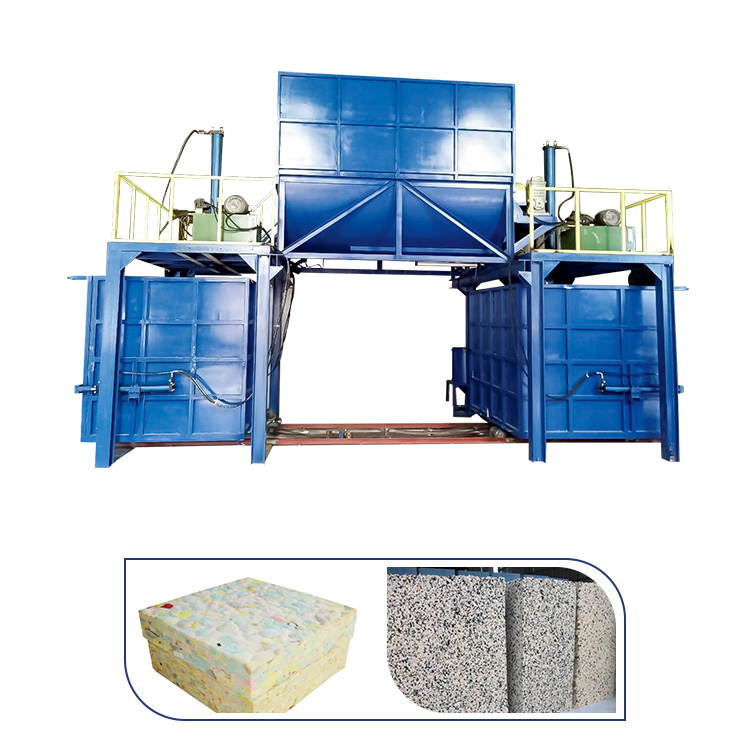
The foam bonding is the quiet quality gate in the mattress factory: the layers of the comfort system, the foam, the fiber and the fabric, are held together by the adhesive, and the adhesive choice decides whether the bond holds for the mattress life or delaminates in the first months. The two commercial options are the hot-melt and the solvent adhesive. The hot-melt is the thermoplastic glue applied hot that cools into the bond, fast, clean and with no solvent vapors; the solvent adhesive is the liquid glue that dries as the solvent evaporates, flexible and forgiving but with the solvent handling and the drying time. The choice is not which is stronger, it is which fits the foam type, the line speed and the factory environment. The IF-FZS1/2 Re-Bonding Foam Machine, the IF-SZXQ1 Automatic Linear Quilting Machine and the IF-S4DD Four-Head Dotting Machine are the machine cases this guide maps. This guide compares the bond chemistry, the temperature window, the open time, the risk profile and the line-fit decision.
The mattress comfort system is a sandwich: the foam layers, the fiber pad and the quilted fabric are stacked, and the adhesive is what makes the sandwich a mattress instead of a pile of layers. The bond quality shows in the first months of use: the mattress that delaminates, where the layers shift and the fabric wrinkles under the cover, comes back as the warranty claim, and the claim is the most expensive quality failure in the factory because the whole unit is lost. The adhesive choice decides the bond: the hot-melt creates the fast strong bond with the clean process, the solvent creates the flexible bond with the drying time, and the factory picks the adhesive that matches the foam, the line speed and the environment. This guide walks the two chemistries, the temperature window that controls the hot-melt, the open time that controls the solvent, and the decision framework that matches the adhesive to the line.
The comparison table is the starting map: the hot-melt trades the open time for the clean fast bond, the solvent trades the vapors and the drying time for the flexible assembly window.
The hot-melt adhesive is the thermoplastic polymer that is solid at the room temperature and melts into the liquid glue when heated, typically to the 150 to 180 degree window for the mattress bonding. The application is the melt-and-bond cycle: the glue is heated in the tank, pumped to the applicator, laid onto the foam surface, and the layers are pressed together while the glue is still hot, so the bond forms as the glue cools back to the solid. The speed is the hot-melt advantage: the bond is ready in the seconds of the cooling, the open time, the window where the glue stays tacky enough to bond, is roughly ninety seconds, and the line can press the layers immediately without the drying station. The hot-melt is also the clean option: there are no solvent vapors, no drying fumes and no flammable liquid on the floor, which simplifies the ventilation, the fire protection and the solvent-handling compliance. The hot-melt limitation is the heat and the open time: the foam that cannot take the heat, the very soft low-density grades, can be damaged by the hot glue, and the short open time means the layers must meet within the ninety seconds, which forces the tight line coordination.
The solvent adhesive is the glue dissolved in the solvent carrier, applied as the wet liquid that dries as the solvent evaporates, leaving the adhesive film behind. The application is the wet-and-dry cycle: the glue is sprayed or rolled onto the foam, the solvent begins to evaporate immediately, and the layers are pressed together while the glue is still tacky, with the bond completing as the solvent fully dries. The open time is the solvent advantage: the wet glue stays tacky for minutes, sometimes much longer, so the operator can apply the glue, position the layers and adjust the alignment before the bond sets; the flexibility is valuable on the complex builds, the curved panels and the hand-assembled zones where the ninety-second hot-melt window is too tight. The solvent limitation is the process burden: the solvent vapors need the extraction and the ventilation, the wet glue is flammable and needs the fire protection, and the drying time means the line needs the drying space or the wait before the next step. The solvent adhesive is the traditional choice, still standard in the factories that value the assembly flexibility, and the modern factory weighs the flexibility against the ventilation and the fire compliance costs.
Hot-melt: melt at 150-180C, bond forms as the glue cools, ~90s open time, no vapors, clean, but heat-sensitive soft foams need care | Solvent: applied wet, dries as the solvent evaporates, minutes of open time, flexible assembly, but vapor extraction + flammability + drying time
The hot-melt bond is a temperature story, and the temperature window is the control point that the factory must hold. The low end of the window is the melt point: if the glue is applied below the melt range, the adhesive is too thick to wet the foam surface, the bond contact is poor and the delamination follows; the operator reads the glue temperature at the applicator, not the tank, because the glue cools along the hose and the gun. The high end of the window is the degradation point: if the glue overheats, the polymer breaks down, the bond strength drops and the glue darkens and smells; the overheated glue is the silent failure, because it looks normal at the application and delaminates in the field. The control is the closed loop: the hot-melt system holds the temperature at the tank and the hose with the thermostats, the operator checks the applicator temperature at the start of each run, and the line records the temperature against the batch, so the bond quality is traceable to the run. The temperature window is the difference between the bond that holds and the bond that fails, and the factory that holds the window holds the quality gate.
The open time is the scheduling number of the bonding line, and the adhesive choice is a line-fit decision. The hot-melt open time, the roughly ninety seconds, fits the fast automated line: the glue is applied, the layers are pressed in the same motion and the bond is ready before the unit reaches the next station, so the line runs the continuous flow without the drying buffers. The solvent open time, the minutes, fits the flexible line: the hand assembly, the multi-layer builds and the alignment-sensitive panels get the working time they need, but the line pays with the drying space and the ventilation. The line-fit test is simple: the factory times the gap between the glue application and the layer pressing on its own line, and the adhesive with the open time that covers the gap wins; the fast line with the sub-minute gap runs the hot-melt, the hand-assembly line with the multi-minute gap runs the solvent. The factory also counts the adhesive cost: the hot-melt applies in the controlled dots and the thin films, the solvent applies in the wet coats, and the hot-melt typically uses ten to twenty percent less adhesive per unit, which compounds over the production volume.
The line-fit table is the practical map: the factory reads its own application-to-press gap and picks the adhesive that covers it, then lets the volume and the compliance costs decide the final choice.
The risk profile is where the two adhesives separate in the factory ledger. The solvent adhesive carries the process risk: the solvent vapors in the breathing zone need the extraction and the ventilation, the wet glue and the solvent-soaked rags are the flammable material that needs the fire-rated storage and the disposal, and the solvent-handling compliance, the exposure limits, the safety data sheets and the staff training, is an ongoing cost line. The hot-melt carries a different, smaller risk: the molten glue at the 150 to 180 degrees is a burn hazard at the applicator, and the heated system needs the guarding and the training, but there are no vapors, no flammable liquid and no solvent-disposal stream. The risk comparison is not only the safety, it is the money: the solvent factory invests in the extraction, the fire protection, the storage and the compliance paperwork, and the hot-melt factory invests in the applicator guarding and the temperature control. The factory that totals the risk cost, not just the glue price per kilo, often finds the hot-melt is the cheaper total cost even when the glue itself costs more.
Solvent risk: vapors in breathing zone, flammable wet glue and rags, fire-rated storage, exposure compliance, disposal stream | Hot-melt risk: molten glue burn hazard at the applicator, heated-system guarding | Total-cost view: solvent pays extraction + fire + compliance + disposal; hot-melt pays guarding + temperature control
The roadmap chooses the bonding system in five steps, run before the line change. Step 1: the bond baseline, measuring the current delamination rate, the glue cost per unit and the application-to-press gap on the existing line, to set the numbers before. Step 2: the foam audit, listing the foam grades, the heat sensitivity and the open-time needs per product, and marking the special cases that need the solvent. Step 3: the line-fit test, running the hot-melt and the solvent samples on the production foam, measuring the peel strength, the open-time match and the bond appearance, and recording the results. Step 4: the risk-cost comparison, totaling the ventilation, the fire protection, the storage, the disposal and the compliance cost for the solvent against the guarding and the temperature control for the hot-melt. Step 5: the change plan, picking the adhesive from the test data, installing the applicator and the temperature control, training the operators and re-measuring the delamination rate and the glue cost against the baseline. The factory that runs the five steps gets the bond that holds, the adhesive cost that drops and the delamination rate that moves toward zero.
The IF-FZS1/2, the IF-SZXQ1 and the IF-S4DD cover the bonding machines this guide maps, and the five-step roadmap matches the adhesive to your line. Contact our bonding team for the hot-melt configuration for your foam line, the dot-application options and the temperature-control procedure.
Contact our bonding team today for the hot-melt configuration for your mattress line: the applicator and temperature-control options, the dot-application equipment, the foam-grade testing and the bond-quality procedure that holds your comfort system together.