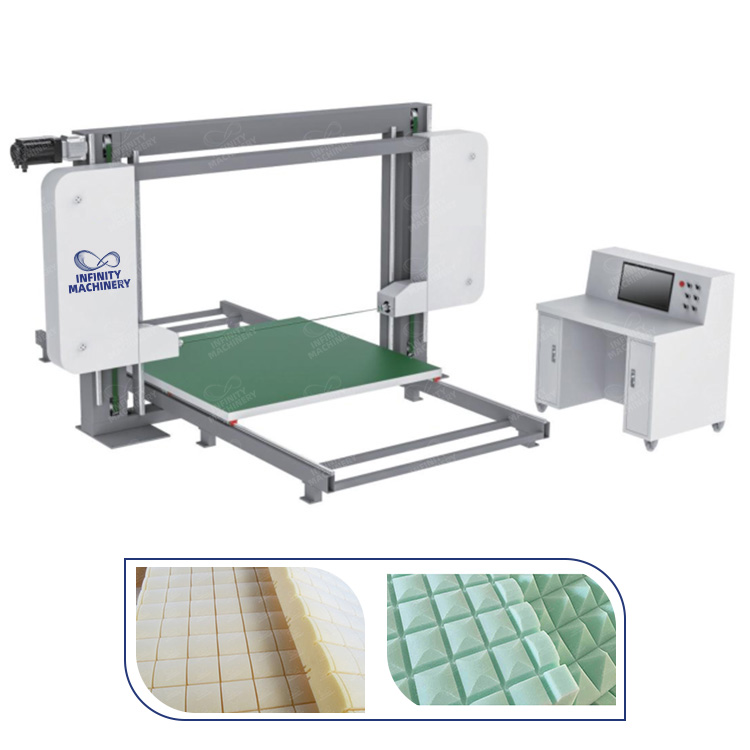
The mattress factory accident is never the machine alone; it is the machine plus the untrained operator plus the missing step. The operator who reaches into the running machine to pull the stuck fabric, the worker who cleans the cutting head without stopping the motor, the mechanic who repairs the compression cylinder without releasing the pressure, and the operator who steps into the path of the moving carriage, each accident has the same shape: the energy was not isolated before the person entered the danger zone. The safety training places the isolation protocol first: the IF-B100 High Speed Bonnell Spring Coiling Machine runs with the fast wire and the moving tools that demand the guarded operation, the IF-CR8 Automatic Mattress Compression and Roll Packaging Machine holds the stored hydraulic pressure that demands the released-energy lockout, and the IF-CNCH Horizontal Blade Foam Cutting Machine runs the blade that demands the guard and the stop before the approach, so the trained operator treats every machine as the energy source that must be locked, tagged and verified before the hands go in.
The safety training starts before the first shift, and the operator who knows the machine, the energy and the emergency is the operator who works safely. The machine introduction is the first module: the operator learns the start, the stop and the emergency stop of the machine, the normal operating cycle and the abnormal sounds and smells, and the introduction gives the operator the baseline of what the machine should do. The energy introduction is the second module: the operator learns the energy sources of the machine, the electric motor, the hydraulic pressure, the compressed air and the stored spring force, and the operator who knows the energies knows where the danger lives. The guard introduction is the third module: the operator learns the guards and the interlocks of the machine, the guard that must stay in place, the interlock that stops the machine when the guard opens, and the rule that the guard is never removed for convenience. The emergency introduction is the fourth module: the operator learns the emergency stop location, the first aid point, the fire extinguisher and the evacuation route, and the emergency module makes the response automatic when the seconds count. The test is the fifth module: the operator passes the written and the practical test before the first unsupervised shift, the test confirms the knowledge and the skill, and the factory that tests the training knows who is ready. The training rule: the machine, the energy, the guard, the emergency and the test are the five modules of the day-one training, and the factory that runs the five puts no untrained operator on the floor.
The lockout-tagout protocol is the core of the repair and cleaning safety, and the five steps turn the running machine into the safe machine. The announce step is the first: the operator announces the maintenance, informs the team and posts the maintenance sign, so nobody restarts the machine while the work is in progress. The shutdown step is the second: the operator runs the machine to the safe stop position, completes the cycle and presses the normal stop, so the machine rests in the known state with no part in motion. The isolate step is the third: the operator switches off the main power, closes the air valve, releases the hydraulic pressure and applies the lock with the personal key, and the lock is the physical guarantee that the machine cannot start because the key is with the worker. The tag step is the fourth: the operator attaches the tag with the name, the date and the reason to the lock, the tag tells everyone why the machine is locked and who owns the lock, and the tag turns the locked machine into the communicated state. The verify step is the fifth: the operator presses the start button to confirm that the machine does not start, tests the air and the pressure release, and then enters the danger zone, so the verify step proves that the isolation works before the hands go in. The removal step is the sixth: when the work is done, the operator inspects the machine, removes the tools, removes the lock and the tag with the own key, and restarts only after the area is clear, so the removal is the controlled return to the running state. The protocol rule: announce, shut down, isolate, tag, verify and remove, and the operator who runs the six every time keeps the energy isolated until the work is truly done.
The fast machines carry the highest energy density, and the guard rules protect the operator from the wire, the blade and the moving carriage. The wire machine rule is the first: the spring coiling machine forms the wire at the high speed, the wire tail can whip when the coil breaks, and the operator keeps the guard closed, feeds the wire with the tool and never reaches past the guard while the coil is running, so the rule protects the hands from the fast wire. The blade rule is the second: the foam cutting machine runs the horizontal blade that cuts continuously, the blade is sharp along the whole length, and the operator keeps the guard in place, uses the push stick for the small pieces and stops the blade before the approach, so the rule protects the hands from the blade that does not announce the cut. The carriage rule is the third: the cutting carriage and the compression plate move with the force, the moving part can pinch the operator between the part and the frame, and the operator stays clear of the travel path, keeps the hands off the moving part and uses the interlocked gate, so the rule protects the body from the pinch point. The compression rule is the fourth: the roll packing machine holds the mattress under the hydraulic pressure, the pressure stores the energy even after the motor stops, and the operator treats the closed compression chamber as the loaded state until the pressure gauge shows zero, so the rule protects the worker from the released energy. The training rule: the wire, the blade, the carriage and the compression are the four danger zones of the fast machines, and the operator who respects the four treats the machine as the loaded weapon that is safe only with the guard and the stop.
The housekeeping and the personal safety cover the accidents that happen away from the machine, and the floor, the body and the clothing prevent the fall, the strain and the catch. The floor rule is the first: the aisle stays clear of the material, the cable and the roll, the spill is wiped immediately and the floor marking guides the walkway, so the clean floor prevents the trip and the fall that are the most common accidents. The lifting rule is the second: the operator lifts the heavy roll with the lift, the cart or the team, bends the knees for the light load and asks for the help for the heavy load, so the lifting rule prevents the back strain that takes the worker out of the line. The clothing rule is the third: the operator wears the fitted workwear, the sleeves are rolled or the cuffs are tight, the hair is tied back and the gloves are chosen for the task, so the fitted clothing prevents the catch in the moving part that pulls the worker into the machine. The PPE rule is the fourth: the operator wears the safety glasses for the wire and the blade work, the ear protection for the noisy machines and the safety shoes on the whole floor, so the PPE protects the eyes, the ears and the feet from the flying and the falling objects. The hygiene rule is the fifth: the operator washes the hands after the oil and the chemical work, keeps the water and the food away from the machine area and reports the pain or the discomfort early, so the hygiene prevents the slow injury that is easy to ignore. The floor rule: the aisle, the lift, the clothing, the PPE and the hygiene are the five habits of the floor safety, and the factory that enforces the five removes the accidents that never touch the machine.
The drill habit is what keeps the training alive, and the monthly drill turns the learned steps into the automatic reflex. The monthly drill is the first practice: the factory runs the lockout-tagout drill on a real machine once a month, the operator performs the five steps under the timer and the supervisor corrects the missed step, so the drill keeps the procedure fresh and the operator fast. The surprise drill is the second practice: the supervisor announces a simulated fault, the operator runs the isolation without the preparation and the supervisor evaluates the sequence, so the surprise drill tests the real behavior instead of the rehearsed answer. The near-miss report is the third practice: the operator reports the near miss, the moment when the accident almost happened, and the factory investigates and fixes the cause, so the near-miss report catches the hazard before the injury. The incident review is the fourth practice: the factory reviews every injury and every equipment damage with the team, the review names the cause and the correction and the correction is followed up, so the incident review turns the mistake into the lesson. The refresher is the fifth practice: the new operator gets the full training, the experienced operator gets the quarterly refresher and the machine change triggers the new-machine training, so the refresher keeps the knowledge current with the floor. The drill rule: the monthly drill, the surprise drill, the near-miss report, the incident review and the refresher together keep the safety training alive, and the factory that drills the safety makes the safe step the automatic step.
Contact our team for the IF-B100, IF-CR8 and IF-CNCH machines with the guards and the interlocks that support your lockout-tagout protocol.