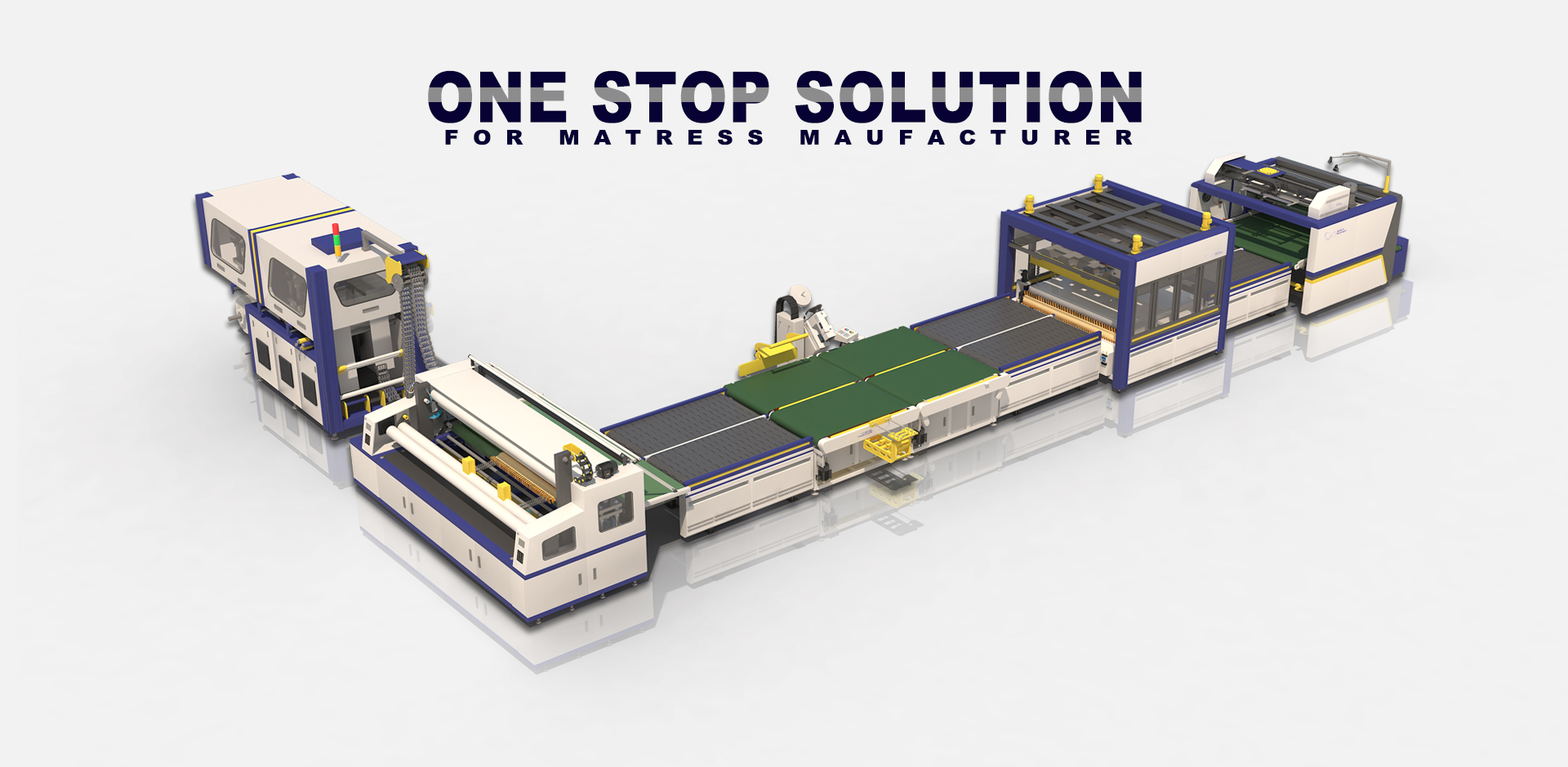
The factory transit stain is the dirt that the mattress never touches in the warehouse but picks up on the way: the unit is dragged across the concrete floor between the stations, the floor carries the dust, the oil and the scuff, and the mattress that was clean at the quilting arrives stained at the packing. The manual dragging is the hidden stain machine: the operator pulls the mattress by the corner or the edge, the fabric drags the floor, and the drag leaves the gray line, the dark streak and the worn patch on the surface that the customer sees. The conveyor is the answer that removes the contact: the mattress rides the belt or the rollers between the stations, the fabric never touches the floor, and the unit arrives as clean as it left. The IF-APL Mattress Automatic Production Line, the IF-FC Foam Clamp and the IF-SBP90 Heavy Flanging Machine are the machine cases this guide maps. This guide walks the drag stain sources, the conveyor design, the line layout and the stain-free handling standard.
The factory transit stain is the defect that appears between the stations, and it is the easiest defect to miss because no one sees the moment it happens. The mattress is clean when it leaves the quilting, the border or the assembly station, and it travels to the next station; the travel is the manual dragging across the floor, the operator pulls the unit by the corner, the fabric drags the concrete, and the floor leaves its mark. The concrete floor is the stain bank: the dust from the cutting and the foam, the oil from the machines, the scuff from the pallets and the dirt from the shoes build the floor film, and the dragged mattress collects the film in the gray line, the dark streak and the worn patch. The transit stain is the quality leak: the unit passes the station checks clean, the stain appears in the travel and the customer or the inspector catches it at the packing, and the stained unit is re-cleaned, re-covered or rejected. The transit question is what the handling answers: the mattress that is carried without the floor contact cannot pick up the floor stain, and the conveyor is the carrying system that removes the drag. The factory that moves the units by the conveyor, the belt, the roller or the powered line, closes the stain gap, and the units arrive at every station as clean as they left the last one.
The handling method decides the stain, and the conveyor removes the floor contact that the drag depends on.
The drag stain map shows where the concrete marks the mattress, and the map has the four hot zones. Zone one is the long transfer: the mattress dragged between the quilting and the border, or the border and the assembly, travels the longest distance and drags the whole way, collecting the continuous gray line on the underside. Zone two is the corner turn: the mattress turned in the aisle or the doorway drags the corner and the edge, and the turn scrubs the fabric against the floor, leaving the dark worn patch. Zone three is the machine feed: the mattress pulled into the flanging or the tape edge machine drags the short approach, and the approach floor carries the oil and the metal dust from the machine, leaving the dark streak on the fabric. Zone four is the storage pull: the mattress pulled out of the stack or the rack drags the edge and the corner against the floor, and the repeated pulls wear the same spot. The four zones are the stain sources, and the map is the line design input: the conveyor is placed at the four zones, the long transfers, the turns, the machine feeds and the storage pulls, and the floor contact is removed where the stains happen. The stain map is the audit the factory runs before the conveyor investment, and the map shows the zones where the conveyor pays back the fastest.
Zone 1: long transfers between stations, continuous gray line on the underside | Zone 2: corner turns, dark worn patch from the scrub | Zone 3: machine feeds, oil and metal dust streak | Zone 4: storage pulls, repeated wear on the same spot | The map is the audit before the conveyor investment, the zones where the conveyor pays back fastest
The conveyor design is the answer to the drag stain, and the design has the three carrying forms. Form one is the roller conveyor: the mattress rides the free rollers between the stations, the operator pushes the unit with the light effort and the fabric stays above the floor, and the roller conveyor is the simplest upgrade for the straight transfers. Form two is the belt conveyor: the powered belt carries the unit at the steady speed, the mattress sits on the belt surface and the belt is kept clean, and the belt conveyor matches the paced line where the unit moves without the operator push. Form three is the powered line conveyor: the integrated conveyor of the automatic production line carries the mattress through the whole line, from the spring to the quilting to the border to the packing, and the unit never touches the floor from the first to the last station. The design also covers the transfer points: the feed tables and the roller extensions at the machines, the turntables at the corners and the lifts at the height changes, so the unit is carried at every transition and the floor contact is zero. The conveyor design is the carrying system, and the system is measured by the contact points: the factory that counts the floor contact points and removes them one by one closes the stain gap with every removal.
The line layout is the conveyor placement plan, and the plan follows the unit travel. The factory maps the movement of the mattress through the day: the stations, the distances and the directions, and the layout places the conveyor on the high-traffic paths first, the long transfers and the machine feeds where the units move the most. The layout principle is the continuous flow: the stations are arranged so the unit moves in the straight line or the smooth curve, the conveyor connects the stations without the gaps, and the manual handling shrinks to the load and the unload at the stations. The layout also cleans the floor: the conveyor removes the units from the floor path, the floor is cleaned and sealed in the handling zones, and the dust and the oil sources are contained at the machines, so the floor that remains is the clean floor. The layout is the balance of the investment and the travel: the factory that places the conveyor on the highest-traffic paths removes the most stains per meter, and the layout that grows with the line, the extensions and the branches, carries the future flow. The line layout is the second half of the conveyor answer: the conveyor removes the contact, and the layout removes the unnecessary travel, and the two together make the stain-free flow.
The layout converts the conveyor into the flow system, and the flow system carries the units clean through the factory.
The conveyor removes the drag, and the stain-free handling standard keeps the units clean at the points the conveyor cannot cover. The standard is the rule set for the handling: rule one is the carry, not the drag, the operators carry or roll the units that move by hand, and the dragging across the floor is the forbidden move; rule two is the clean surface, the conveyor belts, the roller tops, the feed tables and the work surfaces are wiped on the schedule, so the carried unit meets the clean surface; rule three is the clean floor, the handling zones are swept and the oil spills are contained, so the floor that the unit never touches stays clean anyway; rule four is the cover, the finished mattress travels the longer distances with the protective cover or the film, so the rare contact does not mark the fabric. The standard is the training and the audit: the operators are trained on the carry rules at the hiring and the refresh, the supervisors audit the handling on the walkthrough, and the stain events are logged with the location, so the standard is enforced and the stains are traced to the handling that caused them. The standard is the daily discipline that completes the conveyor, and the factory that runs the standard with the conveyor measures the stain-free weeks, not the re-clean queue.
Rule 1: carry, not drag, the forbidden floor drag | Rule 2: clean surface, conveyor and table wipe on schedule | Rule 3: clean floor, sweep the handling zones and contain the oil | Rule 4: cover the finished unit for the long travel | The standard is trained, audited and logged, the daily discipline that completes the conveyor
The implementation plan builds the stain-free flow in five steps, run at the line. Step 1: the stain map, walking the factory and marking the drag zones, the long transfers, the turns, the machine feeds and the storage pulls, and logging the stain events by the location for the baseline. Step 2: the conveyor plan, placing the conveyor on the highest-traffic paths first, selecting the roller, the belt or the powered line form for each zone and sizing the transfers. Step 3: the install, adding the conveyors and the feed tables at the zones, the turntables at the turns and the lifts at the height changes, and commissioning the flow with the test units. Step 4: the standard, writing the stain-free handling rules, training the operators on the carry, the clean surface, the clean floor and the cover, and posting the standard at the handling points. Step 5: the re-measure, running the conveyor flow for a month and re-logging the stain events against the baseline; the falling event count proves the conveyor, and the stain-free weeks prove the standard. The factory that runs the five steps carries the units clean between the stations, and the transit stain becomes the memory instead of the daily rework.
The IF-APL, the IF-FC and the IF-SBP90 cover the line conveyor, the lift-carry and the station-feed cases of the stain-free flow, and the five-step plan removes the drag stains in your factory. Contact our line team for the stain map audit for your factory, the conveyor layout plan and the stain-free handling standard that keeps your units clean between the stations.
Contact our line team today for the conveyor design for your factory: the stain map audit, the conveyor layout plan and the stain-free handling standard that remove the drag stains and keep your mattresses clean between the stations.