

1. Daily Lubrication and Oil Reservoir Management
Lubrication ProtocolHigh-speed sewing heads operate at thousands of RPMs, generating intense thermal friction. Without consistent oil flow, internal bushings and rotary hooks degrade rapidly, leading to seized components and costly emergency repairs.
Mechanical Friction Factor
- Oil Level Inspection: Verify that sight gauges on automatic oiling systems show levels between minimum and maximum lines before starting daily shifts.
- Technical Solution: Utilizing manufacturer-recommended synthetic spindle oils ensures smooth high-speed rotation and prevents sludge buildup in tight mechanical tolerances.
Wick and Filter Maintenance
- Filtration Audit: Inspect internal oil wicks weekly for lint contamination or clogging that restricts fluid delivery to the needle bar.
- Technical Solution: Keep genuine spare parts on hand to replace degraded wicks or pumps before oil starvation damages the upper shaft.
2. Servo Motor and Electronic Drive Calibration
Electrical CalibrationModern tape edge systems rely heavily on coordinated servo motors to execute precise corner deceleration and synchronized feeding. Electrical drift or voltage fluctuations can compromise synchronization and seam straightness.
Encoder and Signal Integrity
- Drive Diagnostic: Check encoder cables and terminal connections monthly for looseness caused by machine vibration during heavy mattress processing.
- Technical Solution: Re-calibrate home positions via the PLC touchscreen interface to eliminate positional lag during 90-degree corner turns.
Thermal Management
- Inverter Ventilation: Ensure control cabinet cooling fans and air intake filters remain free of foam dust and textile lint.
- Technical Solution: Clean heat sink fins regularly with compressed air to prevent thermal throttling and protect electronic driver boards from premature burnout.
3. Conveyor Belt Tension and Material Feed Alignment
Feed MechanismThe conveyor and gripping arms must transport bulky mattress panels seamlessly toward the sewing head. Uneven belt tracking causes fabric skewing and irregular border finishes.
Belt Tensioning Parameters
- Tracking Check: Inspect conveyor belts bi-weekly for lateral drift, fraying edges, or uneven rubber wear along the guide rails.
- Technical Solution: Adjust tension bolts symmetrically to equalize traction across the bed platform, eliminating slippage when handling high-friction memory foam builds.
Roller Bearing Inspection
- Bearing Play: Rotate support rollers manually to detect binding, unusual resistance, or acoustic noise from worn roller bearings.
- Technical Solution: Apply high-temperature industrial grease to drive shaft bearings quarterly to ensure smooth, uninterrupted panel advancement.
4. Needle Bar and Rotary Hook Synchronization
Timing PrecisionEven minor mechanical impacts can knock the needle and rotary hook out of time, resulting in skipped stitches, thread shredding, or broken needles at high operational speeds.
Hook Gap Alignment
- Gap Measurement: Use a feeler gauge to verify that the clearance between the needle recess and the rotary hook point remains within 0.05mm to 0.1mm.
- Technical Solution: Lock down timing set screws securely using thread-locking compound after any major maintenance overhaul to prevent vibration loosening.
Needle Selection & Inspection
- Defect Screening: Replace bent or dulled needles immediately; microscopic burrs on needle points catch synthetic threads and cause frequent thread breaks.
- Technical Solution: Maintain an organized inventory of approved needle sizes (such as DP*17 specifications) matched precisely to your heavy-duty binding tapes.
Advanced Tape Edge Machinery for Modern Plants
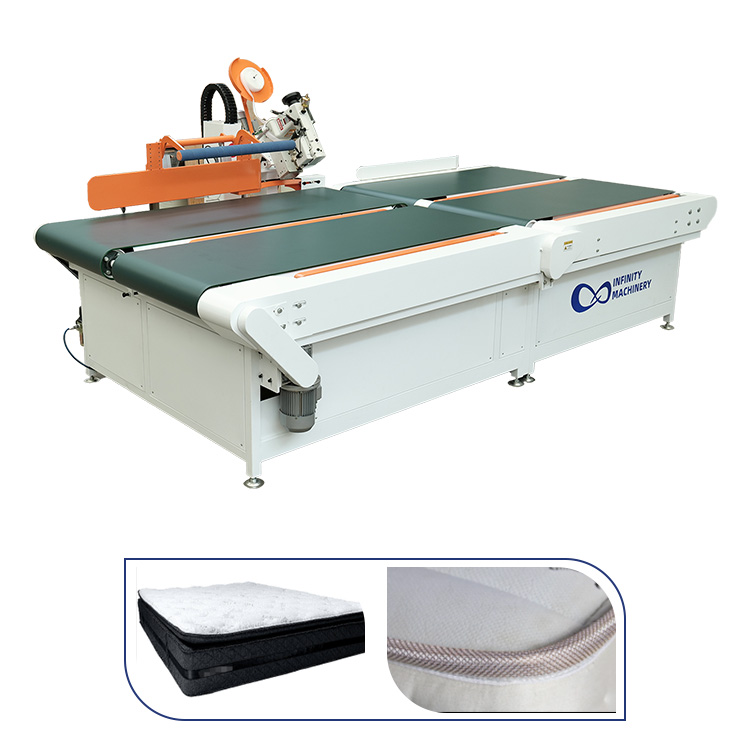
Totally automatic high-speed tape edge machine featuring automatic rotation, flipping, and robotic arm assistance to drastically reduce manual labor and ensure aesthetic, straight sutures.

Ergonomic tape edge system equipped with advanced servo controls, precise mattress positioning, and automated turning capabilities for high-volume, flawless production lines.
5. Pneumatic Air Pressure and Cylinder Inspection
Pneumatic MaintenancePneumatic cylinders power mattress clamping, corner lifting, and turning mechanisms. Water condensation or pressure drops in the airline cause sluggish mechanical response and misaligned corners.
Moisture Trapping & Filtration
- Drainage Routine: Purge water from filter-regulator-lubricator (FRL) bowls daily to prevent moisture intrusion into sensitive pneumatic valves and cylinders.
- Technical Solution: Maintain an inline air pressure of 0.6 to 1.0 MPa to guarantee crisp, high-speed actuation of clamping arms and flipping devices.
Seal and Hose Integrity
- Leak Detection: Listen for pneumatic hissing around push-to-connect fittings and cylinder rod seals during idle periods.
- Technical Solution: Replace hardened or cracked polyurethane tubing immediately to prevent pressure starvation during multi-axis machine cycles.
6. Software, PLC Diagnostics, and Sensor Audits
Digital DiagnosticsOptical sensors, proximity switches, and PLC programs dictate the automated choreography of modern Automated Mattress Tape Edge Solutions. Sensor misalignment can halt production loops instantly.
Optical Sensor Cleanliness
- Lens Wipe Down: Clean dust and adhesive residue off infrared and photoelectric edge-detection sensors at the end of each shift.
- Technical Solution: Verify LED indicator response on sensor housings during manual diagnostic modes to confirm accurate material detection.
Firmware and Parameter Backup
- Data Security: Export machine parameter backups to external storage to safeguard against unexpected electrical surges or memory loss.
- Technical Solution: Consult diagnostic error codes promptly on the touch screen interface to address minor electrical faults before they escalate.
7. Evaluating Upgrades: When Repairing Outdated Equipment Costs More
Plant InvestmentPersistent mechanical failures, chronic parts obsolescence, and slow cycle times on legacy tape edge machines drain plant profitability through constant downtime and excessive rework.
Downtime Cost Analysis
- Efficiency Audit: Calculate the cumulative hourly loss of idle labor and missed daily output caused by recurrent mechanical jams on aging machinery.
- Technical Solution: Transitioning to modern automated platforms eliminates manual bottlenecks and slashes direct cost-per-bed metrics.
Long-Term ROI Evaluation
- Capital Reinvestment: Compare annual repair expenditures against the predictable productivity gains of deploying new, servo-driven machinery.
- Technical Solution: Partner with industry leaders to integrate robust manufacturing cells that deliver stable, zero-defect output for years to come.
Executive Takeaway on Machinery Maintenance
Implementing a rigorous preventative maintenance schedule is the cornerstone of profitable mattress manufacturing. By keeping critical lubrication, electrical calibration, and pneumatic systems in optimal condition, plant owners eliminate unexpected bottlenecks, protect asset value, and ensure high-speed finishing lines operate at maximum efficiency.
Ready to Upgrade Your Factory Line?
Contact Infinity Mattress Machinery today for custom plant layouts, expert engineering consultations, and high-performance equipment solutions.


