

1. The Mechanical Challenge of Multi-Layer Stretch Fabrics
Material PropertyKnitted and high-stretch face fabrics introduce severe feeding inconsistencies because they elongate under mechanical tension, causing layers to shift relative to underlying foam and batting. Without proper tension profiling, top panels distort during quilting, resulting in misaligned patterns and rejected mattress covers.
Material Property:
- Elastic Recovery Variance: Different knit weights stretch unevenly when pulled by standard rollers, creating internal puckering and distortion across wide quilting spans.
- Technical Solution: Implementing independent, multi-axis servo feed systems ensures uniform web tension across all layers before needle penetration occurs.
2. Servo-Driven Roller Synchronization for Slip-Free Feeding
Tension ControlLegacy mechanical feed linkages inevitably slip when processing modern elastic textiles, leading to feed rate errors and irregular stitch lengths. Modern factory setups rely on synchronized servo motors driving both the feed rollers and the saddle mechanism to match fabric elongation precisely.
Operational Parameter:
- Roller Slip Mitigation: Servo feedback loops dynamically adjust roller speeds to compensate for fabric stretch in real time, preventing bunching.
- Technical Solution: High-precision encoder feedback eliminates mechanical lag, ensuring absolute synchronization between material feed and sewing head velocity.
3. Calibrating Presser Foot Pressure and Needle Penetration
Mechanical CalibrationExcessive presser foot pressure will crush delicate foam backing and stretch knitted top sheets, while insufficient pressure causes material flutter and skipped stitches. Plant technicians must calibrate lift height and downward force relative to the aggregate thickness of the multi-layer sandwich.
Engineering Analysis:
- Layer Compression Balance: Maintaining a balanced presser foot clearance prevents fiber displacement and guarantees clean, consistent needle entry points.
- Technical Solution: Adjustable pneumatic or servo-controlled presser feet adapt dynamically to varying quilting thicknesses without deforming elastic face materials.
4. Advanced Thread Tension and Break Detection Systems
Stitch IntegrityWhen quilting multi-layer stretch assemblies, improper needle thread tension combined with fabric elasticity leads to looping, thread breakage, and puckered seams. Integrating automated optical and infrared thread monitoring prevents continuous defect production when working with high-friction synthetic threads.
Diagnostic Step:
- Tension Fluctuation Root Cause: Elastic rebound pulls slack into the stitch formation cycle, causing thread entanglement beneath the needle plate.
- Technical Solution: Advanced infrared detection instantly halts the machine upon thread failure, preserving pattern continuity and preventing material damage.
Essential Quilting Machinery for Knitted Fabrics

Features a German DURKOPP head and adjustable presser foot for precision quilting on delicate knitted and stretch fabrics.
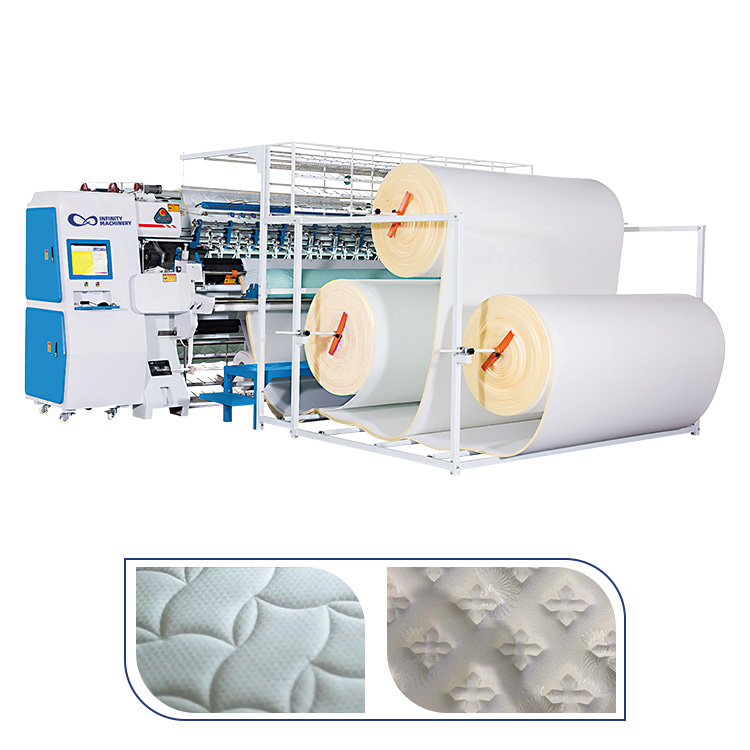
Equipped with servo-driven rollers and advanced infrared thread break detection for stable, high-speed multi-layer quilting.
5. Optimizing Sewing Head Speed versus Feed Velocity
Throughput OptimizationRunning high-speed quilting operations without balancing head RPM against material feed rates generates excessive needle heat and thread friction, especially in synthetic knitted textiles. Comprehensive Mattress Manufacturing One-Stop Solutions emphasize parameter synchronization to maximize daily output without sacrificing stitch quality.
Operational Parameter:
- Thermal Stress Management: High needle speeds on stretchy synthetics cause friction burns and thread snapping if feed rates are mismatched.
- Technical Solution: Programmatic acceleration curves ensure smooth deceleration at pattern corners and consistent stitch density across complex multi-layer designs.
6. Minimizing Scrap and Downtime Through Routine Calibration
Maintenance RoutinePreventative maintenance schedules for multi-layer feeding systems directly dictate factory yield and profit margins. Routine checks of guide rails, encoder calibration, and roller alignment prevent unexpected factory downtime and eliminate costly fabric waste.
Diagnostic Step:
- Mechanical Wear Identification: Progressive play in drive linkages causes pattern drift and uneven tension across wide-width mattress panels.
- Technical Solution: Establishing daily lubrication protocols and automated tension diagnostics ensures continuous, defect-free operation across multiple manufacturing shifts.
Strategic Plant Investment Takeaway
Transitioning from legacy manual feeding setups to advanced, servo-controlled equipment from Infinity Mattress Machinery is the definitive strategy for reducing cost-per-bed, eliminating material waste on delicate stretch fabrics, and securing long-term factory profitability.
Ready to Upgrade Your Factory Line?
Contact our engineering experts today for a custom consultation and plant design layout tailored to your production goals.


