

1. The Hidden Bottlenecks of Manual Mattress Packaging
Operational BottleneckManual compression and heat-sealing require heavy physical exertion, leading to operator fatigue, inconsistent film tension, and frequent packaging wrinkles. These legacy workflows create severe line stoppages right before final dispatch.
Labor Strain & Cycle Inconsistency
- Physical Fatigue Factor: Operators handling bulky mattresses manually experience declining output over an 8-hour shift, causing variable wrap quality and film waste.
- Technical Solution: Integrating advanced factory automation standardizes the compression cycle, eliminating human variance and ensuring uniform film sealing across every shift.
2. Throughput Velocity: Multiplied Shift Output
Production SpeedManual packaging caps factory output due to the slow speed of manual alignment, folding, and bagging. Automated systems execute continuous high-speed compression and sealing, instantly multiplying daily bed output per shift.
Output Velocity Metrics
- Cycle Time Differential: Manual wrapping typically yields 3 to 5 units per hour per worker, whereas automated lines achieve rapid, continuous throughput.
- Technical Solution: Modern engineering features synchronized conveyor integration that accelerates raw output, turning packaging zones from bottlenecks into high-speed conduits.
3. Labor Headcount Reduction and Wage Savings
Financial ROIRelying on large manual teams for heavy lifting and wrapping drives up operational overhead and exposes plants to labor shortages. Transitioning to automated packing reallocates personnel to high-value supervision roles.
Workforce Optimization
- Labor Cost Escalation: Heavy reliance on manual handlers increases wage expenditures and vulnerability to high turnover in physically demanding roles.
- Technical Solution: Adopting sophisticated automated lines reduces direct packing headcount by up to 70%, securing rapid return on capital investment.
4. Compression Consistency and Foam Protection
Material IntegrityImproper manual compression can damage internal foam cells and spring assemblies through uneven pressure distribution. Advanced machine-controlled compression protects internal structural integrity while achieving minimal package volume.
Structural Preservation
- Pressure Distribution: Manual hand-strapping often applies localized stress that permanently deforms high-resiliency foam layers.
- Technical Solution: Precision-calibrated pneumatic and servo-driven compression plates apply uniform pressure, safeguarding foam recovery profiles upon unboxing.
Essential High-Speed Machinery for Modernized Plants
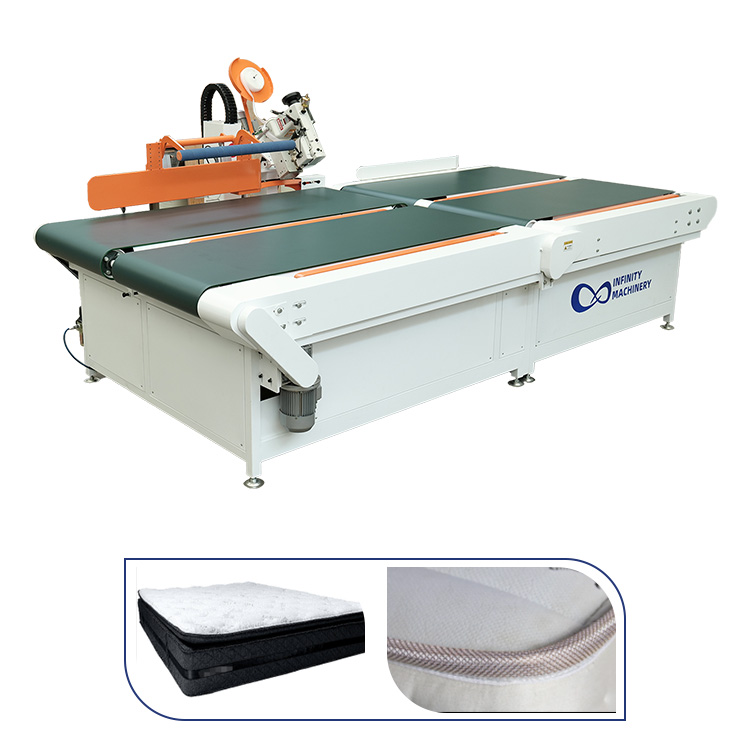
Equipped with automated robotic turning arms and PLC control to maximize sewing efficiency and minimize labor intensity prior to final packaging.

Features advanced servo control and automated mattress flipping to ensure high-speed, flawless edge finishing for high-volume manufacturing plants.
5. Floor Space Optimization and Plant Layout
Facility LayoutManual packaging areas require expansive staging zones for workers to maneuver bulky mattresses during wrapping. Compact automated systems integrate seamlessly into streamlined production layouts, freeing valuable square footage.
Spatial Efficiency
- Footprint Bloat: Manual staging tables consume excessive factory floor space that could otherwise house primary manufacturing lines.
- Technical Solution: Integrated, compact machinery configurations streamline the workflow from sewing and taping straight into final packaging within a minimal footprint.
6. Maintenance Simplicity and Long-Term Uptime
Equipment ReliabilityJury-rigged manual tools and aging machinery suffer from constant breakdowns and improvised repairs that halt production. Modern industrial equipment is engineered with modular components for straightforward maintenance and accessible replacement parts.
Mechanical Durability
- Maintenance Overhead: Older, non-standardized mechanical systems lead to frequent unscheduled downtime and expensive custom repairs.
- Technical Solution: Modern engineering emphasizes robust structural frames, accessible wear parts, and self-lubricating assemblies that ensure uninterrupted, profitable plant operation.
7. Total Cost of Ownership and Return on Investment
Capital InvestmentEvaluating packaging efficiency requires looking beyond initial machinery costs to examine long-term labor savings, film reduction, and error elimination. Automated systems dramatically lower the cost per packaged bed over their operational lifecycle.
Financial Metrics
- Consumable Wastage: Manual wrapping often results in excessive plastic film overlap and material scrap due to operator error.
- Technical Solution: Automated tension control and exact film-length dispensing minimize material waste, compounding operational savings month after month.
Strategic Manufacturing Summary
Transitioning from labor-intensive manual packaging to advanced automated systems is no longer optional for scaling bedding manufacturers. By eliminating bottlenecks, slashing labor overhead, and protecting material integrity, plant owners secure lower cost-per-bed metrics and unmatched competitive advantage in the global market.
Ready to Accelerate Your Factory Output?
Partner with Infinity Mattress Machinery to upgrade your production lines and maximize profitability.


