

1. The Operational Bottlenecks of Legacy Multi-Needle Quilting Systems
Legacy Equipment BottleneckOlder mechanical quilting machines suffer from severe limitations in speed, mechanical wear, and manual oversight. Frequent clutch adjustments and rigid mechanical linkage systems restrict cycle times, creating an inherent production ceiling that fails to meet modern volume demands.
Operational Friction Analysis
- Mechanical Wear Impact: Aging gear trains and mechanical cams introduce backlash, resulting in irregular stitch spacing and high rates of component fatigue during multi-shift operations.
- Technical Solution: Modern engineering replaces legacy gear systems with direct-drive digital architecture, eliminating mechanical backlash and restoring precision tolerances.
2. High-Speed Servo Drives and Multi-Axis Synchronization
Motion ControlIntegrating closed-loop servo motors across all primary axes ensures flawless synchronization between needle movement, material feeding, and pattern tracing. This precise coordination allows Computerized Mattress Quilting Machines to execute intricate 360-degree jump patterns without compromising speed.
Servo Synchronization Parameter
- Torque Consistency: Independent digital control over the saddle, roller, and sewing head maintains stable tension across heavy multi-layer quilt panels.
- Technical Solution: Utilizing multi-axis servo drives allows acceleration rates up to 300 meters per hour while maintaining a stable stitch length.
3. Mitigating Fabric and Thread Scrap in High-Volume Runs
Material YieldMaterial waste directly erodes gross margins in high-volume bedding manufacturing. Legacy machines frequently ruin expensive damask covers and multi-layer foam panels due to thread jamming, inconsistent feeding, and abrupt tension spikes during pattern transitions.
Material Scrap Factors
- Fabric Slippage: Inadequate clamping pressure on older conveyors causes multi-layer puckering and misaligned quilting lines, rendering panels unsellable.
- Technical Solution: Automated pneumatic tensioners and digital presser-foot height adjustments lock multi-layer panels securely, ensuring zero fabric distortion.
4. Advanced Thread-Break Detection and Uninterrupted Uptime
Uptime OptimizationUnnoticed thread breakage leads to defective quilting batches that require tedious manual repair or total panel scrap. Modern automatic systems rely on instantaneous optical or infrared sensors to halt operations the moment a thread fails.
Diagnostic Monitoring
- Downtime Root Cause: Operators spending excessive time visually inspecting long quilt runs for skipped stitches or broken top/bobbin threads.
- Technical Solution: Infrared thread-break detectors automatically pause the machine and signal the operator, preventing multi-meter defective sewing runs.
Essential Machinery for Scaling Production

Features a German DURKOPP head, automatic thread break detection, and 360° jump-stitch capability for high-volume mattress quilting lines.
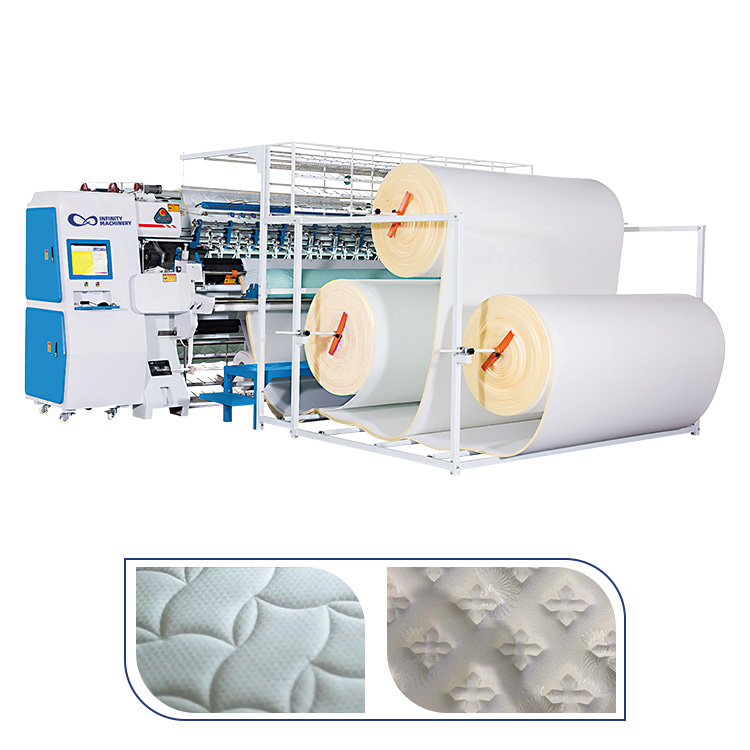
Equipped with servo-driven rollers, new shuttle guide rail support, and advanced infrared detection for high-speed, continuous complex quilting.
5. Integrating Panel Processing with Downstream Cutting Stations
Workflow IntegrationQuilted panels must transition smoothly into downstream cutting and trimming operations without causing floor congestion. A well-designed CNC Mattress Panel Production Line bridges the gap between quilting and sizing with automated conveyor handoffs.
Workflow Synchronization
- Transfer Bottlenecks: Manual lifting and shifting of heavy quilted panels between separate machines introduces physical strain and delays.
- Technical Solution: Integrated conveyor feeding systems and automated stackers synchronize output velocity directly with panel cutters.
6. Reducing Direct Labor Headcount Through Full Automation
Labor OptimizationLabor shortages and rising operational wages make heavy reliance on manual machine handling financially unsustainable. Modern automated quilting cells require fewer operators while doubling daily shift output per square meter of factory floor.
Labor Cost Dynamics
- Operator Dependency: Legacy setups require specialized artisan oversight for tension tuning, pattern loading, and continuous troubleshooting.
- Technical Solution: Intuitive touch-screen interfaces and automated calibration protocols allow semi-skilled operators to manage multiple production lines simultaneously.
7. Routine Maintenance Simplicity and Component Longevity
Plant MaintenanceUnscheduled equipment breakdowns disrupt plant shipping schedules and inflate maintenance overhead. Industrial-grade quilting machinery incorporates centralized automatic lubrication systems and modular component designs to minimize routine upkeep downtime.
Maintenance Protocol
- Lubrication Friction: Manual oiling schedules are frequently overlooked, leading to premature bearing wear and overheated sewing heads.
- Technical Solution: Built-in automatic oil supply systems deliver precise lubrication to high-speed rotary hooks and needle bars, extending operational lifespan.
Executive Investment Takeaway
Replacing slow, legacy manual operations with automated, reliable equipment like Infinity Mattress Machinery is the definitive strategy for reducing cost-per-bed, maximizing output per shift, and securing long-term factory profitability in a competitive global market.
Ready to Upgrade Your Factory Line?
Contact our engineering consultants today for custom plant layouts, machinery specifications, and tailored ROI evaluations.


