

1. The Hidden Bottlenecks of Legacy Multi-Layer Assembly
Operational BottleneckLegacy assembly lines struggle when transitioning from basic inner-spring units to multi-layered hybrid beds featuring memory foam, latex cores, and micro-coils. Outdated manual handling leads to uneven layer bonding, excessive fabric scrap, and high reliance on veteran technicians.
Engineering Analysis: Mechanical Friction & Material Shear
- Legacy Constraint: Older machines lack the variable-tension rollers required to feed high-density visco-elastic foams without stretching or buckling the surface fabric.
- Technical Solution: Modern automated systems utilize synchronized dual-drive belts and programmable pneumatic clamping to maintain constant tension across uneven multi-layer profiles.
2. High-Precision Quilting for Complex Surface Layers
Quilting PrecisionThick, multi-tier quilt panels demand robust sewing dynamics capable of penetrating high-loft batting without thread bunching or needle deflection. Factory upgrades focus on integrating heavy-duty stitching heads that can execute intricate jump-tack patterns across diverse material densities.
Engineering Analysis: Needle Penetration Dynamics
- Material Property: High-loft quilting sandwiches compress unevenly under standard mechanical presser feet, causing skipped stitches and irregular tension pockets.
- Technical Solution: Advanced multi-needle quilting systems incorporate independent servo-driven presser feet and real-time thread break detection to ensure flawless stitch formation.
3. Servo-Driven Control in Advanced Tape Edge Operations
Edge FinishingThe final tape-edge process dictates the perceived retail value of a mattress. Manual manipulation of heavy, multi-layer pillow-top profiles creates operator fatigue, inconsistent corner radiuses, and costly material reworks.
Engineering Analysis: Corner Deceleration & Torque
- Operational Parameter: High-speed taping around 90-degree corners frequently causes tape puckering if sewing head speed remains constant during directional changes.
- Technical Solution: Fully automated tape-edge units feature PLC-controlled automatic corner deceleration and robotic flipping arms that eliminate manual lifting.
4. Eliminating Fabric Scrap and Material Slippage
Material OptimizationMaterial waste directly eats into manufacturing margins. When cutting and feeding multi-layer quilted panels, minor misalignments compound into unusable rolls of ruined fabric and expensive core materials.
Engineering Analysis: Automated Feed Synchronization
- Diagnostic Factor: Manual alignment introduces human error during continuous panel feeding, resulting in skewed cuts and unaligned pattern matching.
- Technical Solution: Integrating computerized conveyor feeding tables with hidden rotary blades ensures precise panel separation with zero edge fraying.
Essential Machinery for Scaling Production
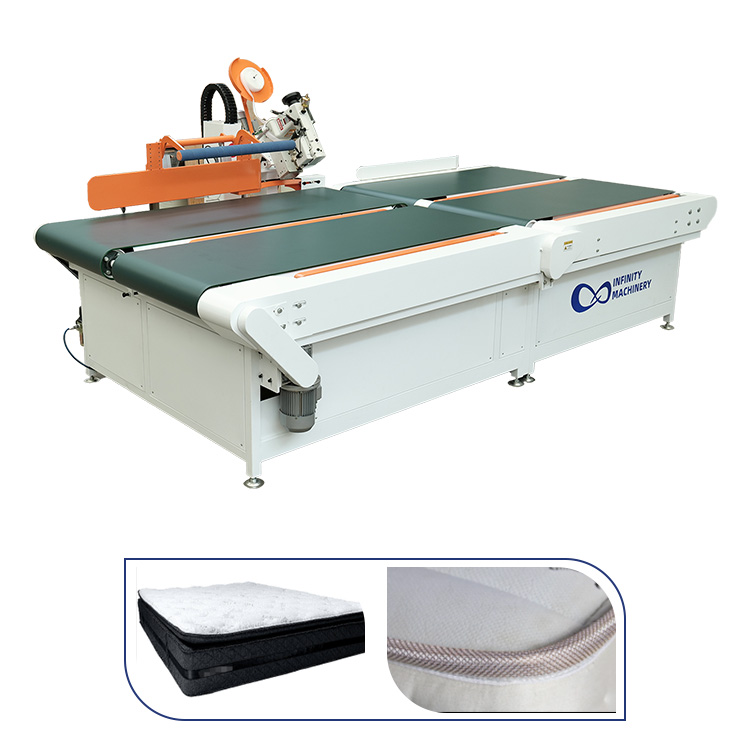
Features automatic 90-degree turning, robotic arm handling, and PLC program control to drastically reduce labor intensity and ensure aesthetic, straight sutures.

Equipped with full three-axis servo control, 0.5-inch needle spacing, and an integrated border slitting device for high-speed multi-layer quilting.
5. Scaling Output per Shift through Integrated Production Lines
Throughput AccelerationIsolated machines create inventory bottlenecks on the factory floor. Transitioning to a streamlined plant layout connects quilting, panel cutting, and edge closing into a continuous workflow that multiplies daily bed output per shift.
Engineering Analysis: Workflow Velocity & Buffer Reduction
- Operational Parameter: Storing half-finished quilted panels between disjointed workstations increases work-in-progress (WIP) clutter and damages soft foam surfaces.
- Technical Solution: Upgrading to a cohesive layout ensures raw materials flow smoothly from quilting directly to mattress packaging without manual staging delays.
6. Lowering Cost-Per-Bed via Reduced Labor Dependency
Financial OptimizationLabor shortages and rising wage pressures make heavy reliance on manual operators unsustainable. Modern automation absorbs repetitive heavy-lifting and precise stitching tasks, safeguarding plant operating margins.
Engineering Analysis: Labor Headcount vs. Hourly Output
- Financial Metric: Manual tape edging and multi-layer flipping require multi-person teams prone to fatigue and inconsistent shift output.
- Technical Solution: Automated machinery reduces station staffing requirements while doubling hourly unit output, rapidly compressing capital expenditure payback timelines.
7. Robust Mechanical Simplicity and Routine Maintenance
Plant ReliabilityComplex machinery must remain accessible and serviceable to prevent costly unscheduled downtime. Factory operators require equipment engineered for straightforward lubrication and durable component longevity.
Engineering Analysis: Component Durability & Lubrication
- Maintenance Protocol: High-speed sewing heads operating at over 1,000 RPM require automated oil supply systems to prevent thermal friction and bearing wear.
- Technical Solution: Modern industrial machinery incorporates self-lubricating closed loops, modular sub-assemblies, and easily accessible digital diagnostic touchscreens for immediate troubleshooting.
Strategic Plant Investment Takeaway
Upgrading from legacy, labor-intensive workstations to automated systems like those engineered by Infinity Mattress Machinery is the definitive strategy for modern bedding plants. By eliminating manual bottlenecks, reducing material waste, and streamlining multi-layer assembly, plant owners secure lower cost-per-bed metrics, unmatched custom profile versatility, and long-term manufacturing dominance.
Ready to Upgrade Your Factory Line?
Consult with our engineering experts to design a customized, high-throughput automated production layout for your facility.


